
The 487th Bombardment Group (Heavy) — the “Gentlemen from Hell” — was one of the most active heavy bomber groups of the United States Army Air Forces’ Eighth Air Force. From their base at Station 137, Lavenham, they flew 185 missions and 6,021 sorties, dropping 14,641 tons of bombs on targets across occupied Europe and into the heart of Germany.
Formation and Training
The 487th Bombardment Group was constituted on 14 September 1943 and activated six days later on 20 September at Bruning Army Air Field, Nebraska. Initial training was conducted on Consolidated B-24 Liberators. In December 1943 the Group transferred to Alamogordo Army Air Field, New Mexico, for further operational training before making the transatlantic crossing in March and April 1944.
The Group arrived at Station 137, Lavenham, Suffolk, on 5 April 1944 — just four weeks before flying its first combat mission.
Group Structure
The 487th comprised four bombardment squadrons, each operating with their own aircraft, crews, and squadron identity. They were assigned to the 4th Combat Bombardment Wing of the 3rd Air Division, Eighth Air Force. The Group’s identifying tail marking was a white letter P within a square — known as the “Square P” — applied to all aircraft.
| Squadron | Code | Notes |
|---|---|---|
| 836th Bombardment Squadron | 2G | One of the three founding squadrons constituted with the Group in September 1943 |
| 837th Bombardment Squadron | 4F | One of the three founding squadrons; home of Ed Wilkowski, original owner of the “Gentlemen from Hell” patch |
| 838th Bombardment Squadron | 2C | One of the three founding squadrons; the 838th operations room at Lavenham is captured in a 1944 photograph held by the American Air Museum at Duxford |
| 839th Bombardment Squadron | R5 | Originally the 8th Anti-Submarine Squadron; redesignated and assigned to the 487th on 1 October 1943 |
Aircraft
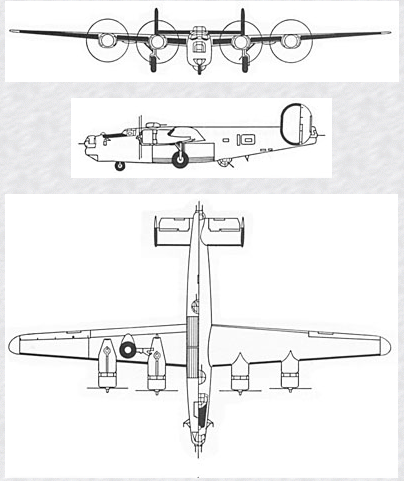
The 487th arrived at Lavenham equipped with Consolidated B-24H and B-24J Liberators, flying their first eleven weeks of combat operations on this aircraft. The B-24 was a capable long-range bomber but presented challenges in formation flying at high altitude — a critical requirement for the Eighth Air Force’s daylight precision bombing campaign.
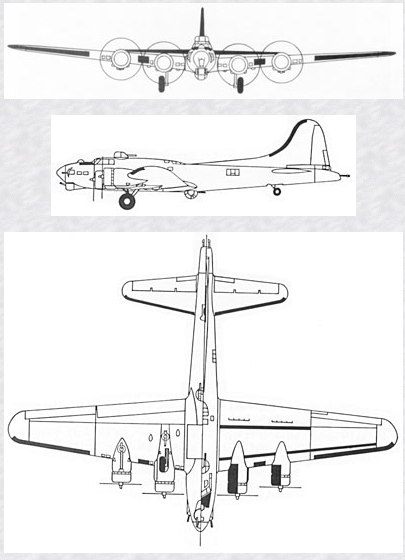
On 19 July 1944, the Group was stood down from combat operations to begin conversion to the Boeing B-17G Flying Fortress, as part of a wider reorganisation that transformed the 3rd Air Division into an all-B-17 formation. Conversion was complete by 1 August 1944, and from that point until the final mission in April 1945, the Group operated exclusively B-17Gs. It was with the Flying Fortress that the 487th flew its most significant strategic missions, including the Christmas Eve 1944 maximum effort against German airfields.
Group Commanders
| Commander | Period | Notes |
|---|---|---|
| Lt. Col. Charles E. Lancaster | October 1943 | First commanding officer during stateside training |
| Lt. Col. Beirne Lay, Jr. | February 1944 – May 1944 | See notable figures below |
| Col. Robert Taylor III | May 1944 – December 1944 | Led the Group through the D-Day period and conversion to B-17s |
| Col. William K. Martin | December 1944 – May 1945 | Commanded the Group through the final winter campaign and war’s end |
| Lt. Col. Howard C. Todt | May 1945 – June 1945 | Acting Commanding Officer post-VE Day |
| Col. Nicholas T. Perkins | June 1945 – August 1945 | Final commanding officer; led the Group’s return to the United States |
Notable Figures
Lt. Col. Beirne Lay, Jr. — First Combat Commander
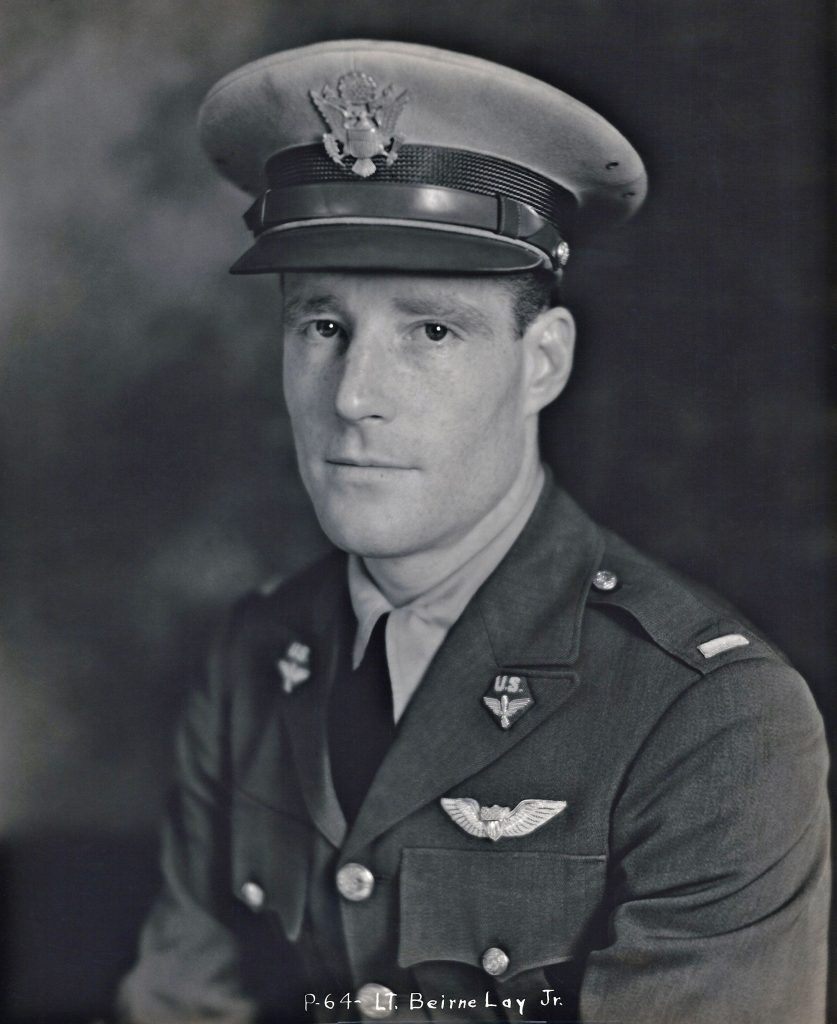
Beirne Lay Jr. was one of the most remarkable figures associated with the 487th. A West Point graduate and pre-war aviator, he had become a prominent Hollywood screenwriter before the war, co-writing the screenplay for the 1949 film Twelve O’Clock High — one of the most celebrated aviation films ever made, based partly on his own combat experiences. He took command of the 487th in February 1944 and led the Group into combat. On 11 May 1944 — just four days into the Group’s combat career — his aircraft was shot down over enemy territory. He evaded capture and eventually returned to Allied lines, returning to duty. His portrait and story are part of the wider 487th archive held by the Group Association.
Brigadier General Frederick W. Castle — Medal of Honor
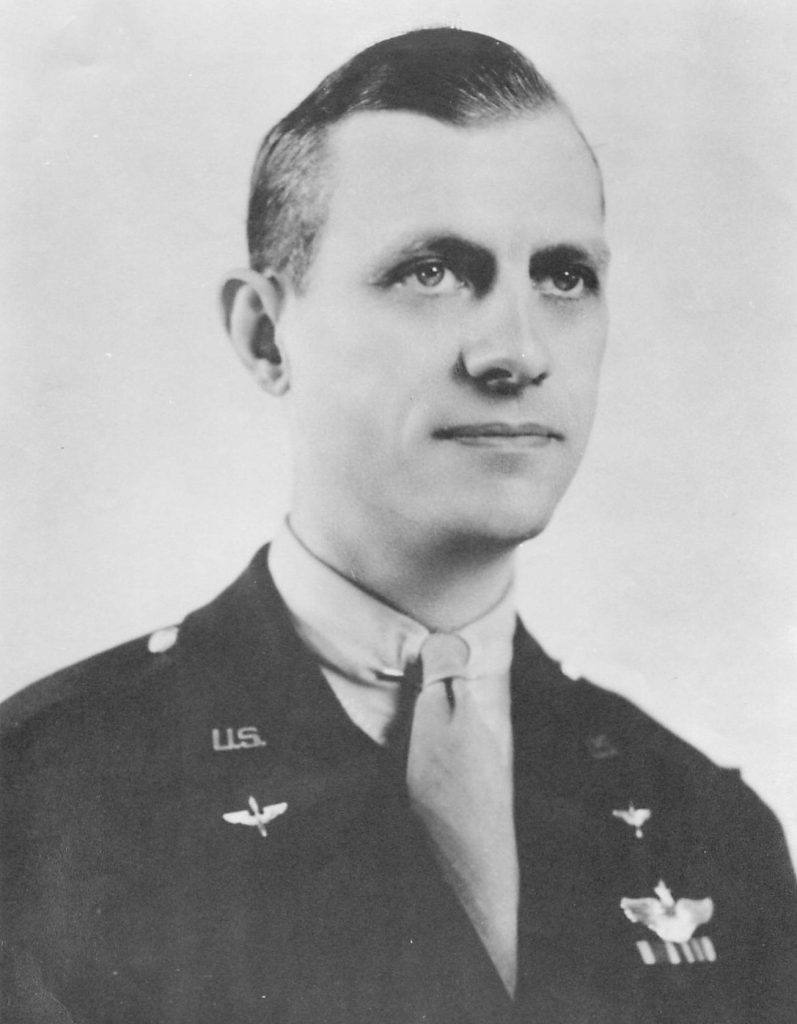
Although not a member of the 487th’s organic command structure, Brigadier General Frederick Walker Castle holds a central place in the Group’s history. As commander of the 4th Combat Bombardment Wing — the Wing to which the 487th belonged — he chose to fly the lead aircraft of the 487th on Christmas Eve 1944, commanding the largest single mission ever mounted by the Eighth Air Force.
The mission on 24 December 1944 — Air Force Mission No. 760 — dispatched 2,046 bombers escorted by 853 fighters against German airfields east of the Rhine. The 487th led the 3rd Air Division. En route to the target, one engine on Castle’s B-17G (serial 44-8444, call sign “Treble Four”) failed. Rather than jettison his bombs over friendly territory below to gain speed and manoeuvrability, Castle refused. The aircraft was attacked by Luftwaffe fighters and Castle was killed. His aircraft crashed with the bombs still aboard.
Castle was posthumously awarded the Congressional Medal of Honor — the highest decoration in the United States military — the last such award to any member of the Eighth Air Force. He was the highest-ranking officer in the Eighth Air Force to receive it. A portrait of General Castle hangs to this day in The Swan Hotel in Lavenham village, which was one of his wartime haunts.
The pilot of “Treble Four” on that final mission was 1st Lt. Robert W. Harriman. His co-pilot, 1st Lt. Claude L. Rowe, and radio operator, T/Sgt Lawrence H. Swain, were also killed in action that day.
Aircrew of the 838th Squadron
A short colour film survives, made by B. S. Kutchins in late 1944 and early 1945, showing clips of the aircrew locally and in the air. The film is one of the few colour records of daily life at Station 137 and can be viewed below. It offers a rare and vivid glimpse of the men and machines that made up the Group during its operational peak. Note there is no audio for the film.
Operational Record
The 487th’s combat record breaks broadly into three phases, each reflecting the changing priorities of the Allied air campaign:
Phase 1 — Pre-Invasion and D-Day Support (May – July 1944)
The Group’s early missions focused on degrading German air power and transportation infrastructure ahead of the Normandy landings. They attacked airfields across France and Belgium, marshalling yards, and coastal fortifications. On D-Day itself — 6 June 1944 — the 487th flew three separate sorties (missions 15, 16 and 17 in the Group log), directly supporting the landings. In July they attacked German positions near Caen in support of British ground forces fighting in the city.
Phase 2 — Strategic Bombing Campaign (August 1944 – March 1945)
With conversion to B-17s complete, the Group turned almost exclusively to strategic targets inside Germany. Oil refineries — particularly Merseburg, which appears nine times in the mission log and was one of the most heavily defended targets in the Reich — were priority objectives. Factories in Nuremberg, Hanover and Berlin, and marshalling yards at Cologne, Munster and Hamm were also repeatedly struck. The Group supported Allied ground forces during the Battle of the Bulge in December 1944 and January 1945, and flew interdiction missions during the Rhine crossings in March 1945.
Phase 3 — Final Missions (April 1945)
The last eight missions of the Group’s war were flown in April 1945, as the Allied armies closed on Berlin from east and west. The final mission — number 185 — was flown on 21 April 1945, targeting Ingolstadt in Bavaria. Germany surrendered unconditionally seventeen days later on 8 May 1945.
Combat Statistics
| Category | Figure |
|---|---|
| Total combat missions | 185 |
| Total sorties flown | 6,021 |
| Total tonnage dropped | 14,641 tons |
| Aircraft Missing in Action | 33 |
| Aircraft lost in other operations | 24 |
| Enemy aircraft destroyed | 22 |
| Enemy aircraft probable | 6 |
| Enemy aircraft damaged | 18 |
| First mission | 7 May 1944 |
| Final mission | 21 April 1945 |
Campaigns
The 487th earned campaign credits for: Air Offensive Europe, Normandy, Northern France, Rhineland, Ardennes-Alsace, and Central Europe.
Group Insignia — The Gentlemen from Hell
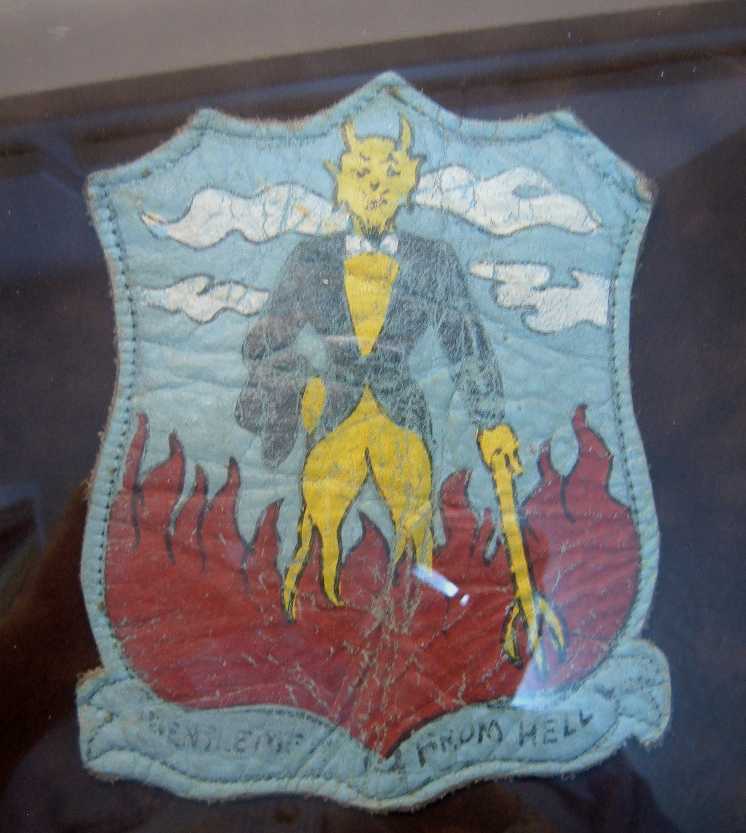
The 487th’s unofficial group insignia depicted a red devil in formal evening dress — white tie and tails — standing amid flames, with the motto “Gentlemen from Hell” beneath. The patch was worn by some original crew members but its existence was largely forgotten after the war. It was rediscovered at the 1999 reunion of the 487th Bomb Group Association, when veteran Ed Wilkowski (837th Squadron) revealed that he still had his original patch. The patch was subsequently presented to Gerry Ogle, son of George Ogle (flight engineer, 837th Squadron), who had it elegantly framed for preservation. A modern replica is now available and the image has become the informal symbol of the Group’s identity.
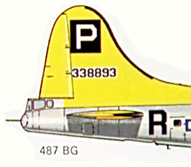
The formal aircraft identification marking was the Square P — a white letter P within a black square — applied to the tail fins of all Group aircraft. This identified them as belonging to the 4th Combat Bombardment Wing of the 3rd Air Division.
The 4th Combat Bombardment Wing and 3rd Air Division
The 487th was part of the 4th Combat Bombardment Wing, headquartered at Bury St Edmunds, Suffolk. The Wing comprised four bomb groups, all based in Suffolk:
| Group | Station | Airfield | Tail Code |
|---|---|---|---|
| 94th Bombardment Group | Station 468 | Bury St Edmunds | Square A |
| 447th Bombardment Group | Station 126 | Rattlesden | Square K |
| 486th Bombardment Group | Station 174 | Sudbury | Square W |
| 487th Bombardment Group | Station 137 | Lavenham | Square P |
The 4th Wing was part of the 3rd Air Division, whose headquarters was at Elveden Hall, Suffolk — a grand country house approximately 20 miles north-east of Lavenham that served as the operational nerve centre for all B-17 operations across Suffolk and Norfolk.
Neighbouring Airfields
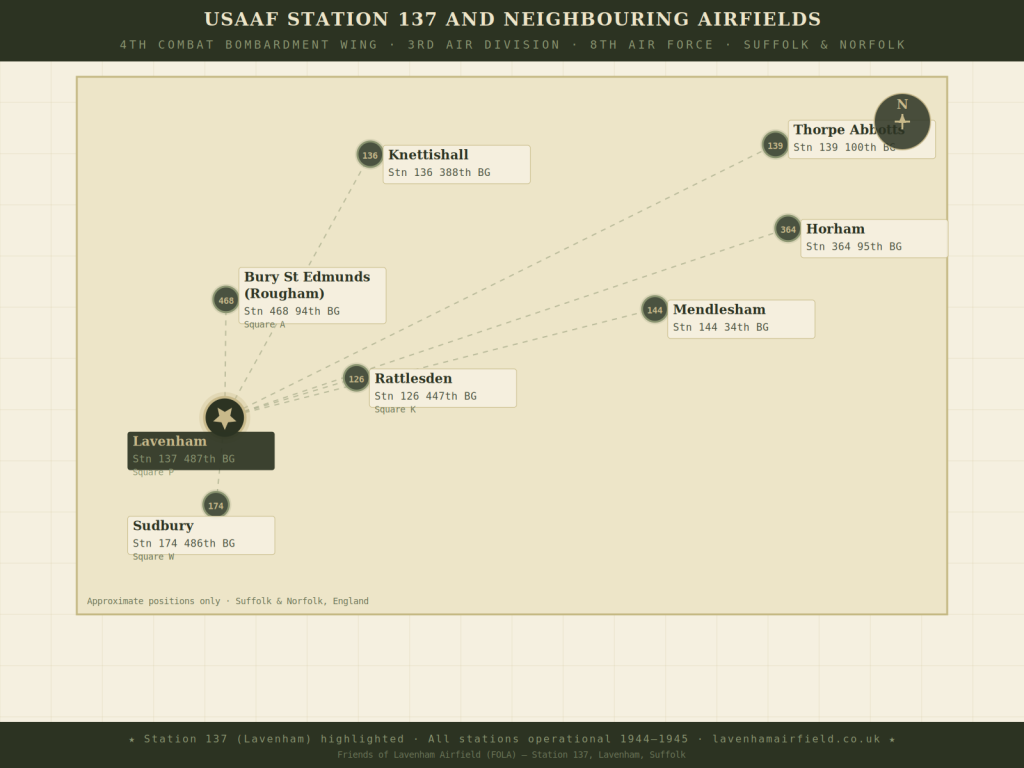
Lavenham was one of nineteen operational USAAF stations in Suffolk alone. The airfields surrounding Station 137 were densely concentrated — on clear days the sound of hundreds of radial engines could be heard simultaneously as multiple groups assembled their formations overhead. The nearest neighbours were:
| Station | Airfield | Group | Distance from Lavenham |
|---|---|---|---|
| 174 | Sudbury (Great Waldingfield) | 486th Bomb Group | Approx. 5 miles south |
| 468 | Bury St Edmunds (Rougham) | 94th Bomb Group | Approx. 12 miles north-east |
| 126 | Rattlesden | 447th Bomb Group | Approx. 10 miles north |
| 136 | Knettishall | 388th Bomb Group | Approx. 20 miles north-east |
| 144 | Mendlesham | 34th Bomb Group | Approx. 20 miles north-east |
| 364 | Horham | 95th Bomb Group | Approx. 25 miles north-east |
| 139 | Thorpe Abbotts | 100th Bomb Group | Approx. 30 miles north-east |
The 94th Bomb Group at Bury St Edmunds — whose control tower survives and houses a museum run by the Rougham Tower Association — was the 487th’s closest Wing partner and in some respects their nearest rival. The 100th Bomb Group at Thorpe Abbotts, Norfolk, better known as the “Bloody Hundredth”, was one of the most storied and most costly units of the entire Eighth Air Force.
After the War
Following Germany’s surrender on 8 May 1945, the 487th remained at Lavenham until 25 August 1945, when the air echelon began flying their B-17s back to the United States. The rest of the Group returned home aboard the RMS Queen Elizabeth. The Group reassembled at Drew Field, Florida in September 1945 and was formally inactivated on 7 November 1945.
The airfield at Lavenham was closed in 1948 and the land returned to agricultural use. The men who had called Station 137 home dispersed back to their lives across the United States — though many maintained the bonds formed here for the rest of their lives, reuniting through the 487th Bomb Group Association.
The 487th Bomb Group Association
The veterans of the 487th and their families have maintained an active association since the war’s end. The 487th Bomb Group Association holds extensive records including mission logs, personnel rosters covering more than 5,000 individuals, aircraft records for over 300 aircraft, and a photographic archive. FOLA works in close partnership with the Association, and their support has been invaluable in building the historical record on this site.
The Association’s website — 487thbg.org — is an essential resource for anyone researching the Group or tracing a family member who served at Lavenham.